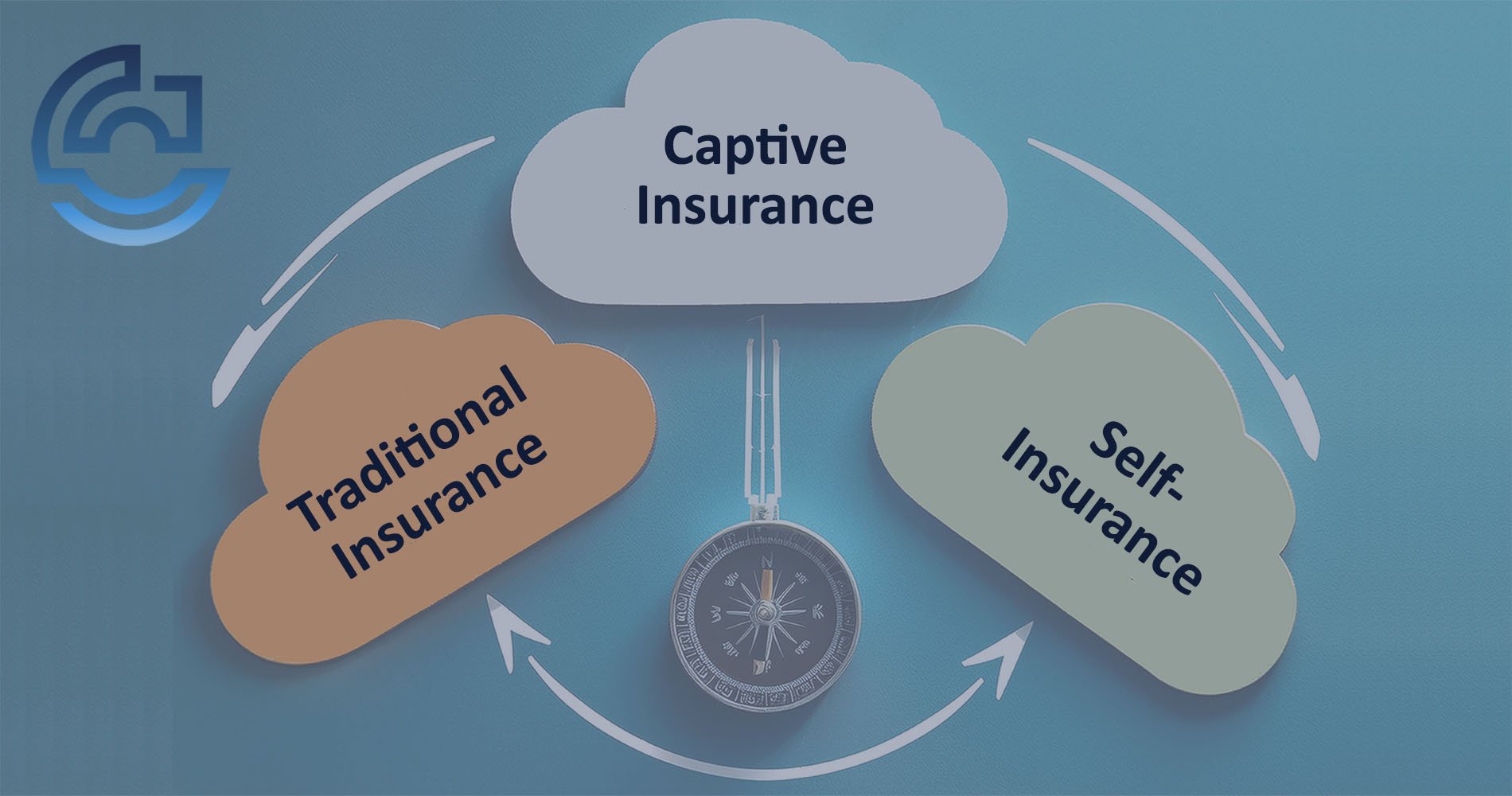

When an owner or CFO hears “you pay your own claims,” they reach for the closest box they know: self-insurance.
They're on the right track, but there's an important distinction. What they're picturing is a business carrying every claim on its own, and that's a very different arrangement. Two questions usually follow close behind: “Am I taking on all the risk myself?” and “If I’m paying my own claims, why am I paying premium?”
Here’s how a group captive is like self-insuring, how it’s different, and how to explain it in a sentence or two.
How is a Group Captive Like Self-Insurance?
In a few real ways:
- Your client pays their own smaller claims first, out of their own loss fund, which their premium pays for.
- Their results drive their cost. A good year can return money. A bad year can cost more.
- They take on more responsibility for safety, loss control and how claims are handled.
Those similarities are exactly why owners who run safe operations are drawn to captives. They want their good results to count.
How is a Group Captive Different From Self-Insuring?
1. It’s insurance. Your client’s risk moves to a licensed captive and is shared across members. A business that self-insures keeps the risk on its own books.
2. Your client pays a real premium. Owners ask about this most directly: if they own part of it, why pay a premium? Because premium funds everything. It pays for your client’s own loss fund, the shared layer, reinsurance, the carrier that issues the policy and the cost of running the program. Owning a share doesn’t replace paying for coverage. It’s what lets good results come back to your client instead of staying with a carrier.
In most group captives, premium is tax-deductible. Each captive is set up differently, though, especially in how risk is shared and money is paid back out, so have the client’s CPA weigh in on their situation.
3. An A-rated carrier issues the policy. A fronting carrier rated A by AM Best issues the policy in its own name. That rating tells you how able the carrier is to pay claims. A business self-insuring has no policy for the layer it keeps.
4. Members share bigger claims, in a set order. Your client’s largest claim is counted first. Each claim up to $100,000 is paid from their frequency fund, the part of their own loss fund set aside for everyday claims. Each claim over $100,000 is paid from their severity fund. Past that, a shared layer funded by the members pays next, then reinsurance. A business self-insuring alone can buy excess or stop-loss coverage, but everything below that point comes out of its own cash. A captive member can still have a rough year. The difference is how much of that swing they carry alone. (Is Being in a Captive Riskier Than Traditional Insurance?)
5. The money up front looks different. Joining a group captive means a capital share and collateral on top of premium. A business self-insuring alone funds its own reserves. Both tie up money. They just do it in different ways.
Employee benefits captives follow the same idea but work differently. A rated stop-loss carrier sits on top, and every claim has a set deductible. This article covers property and casualty captives.
Self-Insured vs. Group Captive vs. Guaranteed Cost
|
Self-Insured on its Own |
Group Captive |
Guaranteed Cost |
|
|
Who funds smaller claims |
The business, from its own reserves |
The member’s own loss fund in the captive |
The carrier, after any deductible |
|
Who funds larger claims |
The business up to its retention, then any excess or stop-loss coverage |
The member’s severity fund, then a shared member layer, then reinsurance |
The carrier, up to policy limits |
|
Policy |
None for the retained layer |
Issued by an A-rated fronting carrier |
Issued by the carrier |
|
Money up front |
Its own reserves |
Premium, a capital share and collateral |
Premium, often in installments |
|
Good years |
The business keeps the savings |
Unused loss money can come back, though it isn’t guaranteed |
Can help at renewal; premium paid isn’t returned |
|
Bad years |
The business pays up to its retention |
The most a member can pay is their premium plus one more frequency fund |
The policy pays; renewal pricing may rise |
|
Who it fits |
Financially strong businesses with steady claims, comfortable carrying large swings |
Businesses that run safely, want to share in their results and can carry the upfront commitment |
Owners who want the most predictable cost during the policy period |
General comparison. Terms vary by program, state and line of coverage.
Who’s a Better Fit for Each Option?
Self-insuring on its own tends to fit larger, financially strong companies with steady, predictable claims and the people to manage them.
A group captive tends to fit a business with:
- About $250,000 or more in combined premium in the lines going into the captive: workers’ comp and auto, plus general liability when it’s placed
- A strong safety record and loss history
- The cash to carry the first two years
- An owner who’s thinking several years out
Guaranteed cost fits an owner who wants a predictable premium for the policy period and doesn’t want to share in results, good or bad. Deductibles, audits and renewal changes still apply, but the carrier carries the swing.
How Do You Explain the Difference to a Client?
Keep the explanation simple:
"There are some similarities to self-insurance because you pay the first layer of your own claims, and your loss experience affects what you get back. But a group captive is an insurance company that you partly own. Your policy is issued by an A-rated fronting carrier, larger claims are shared among members, and reinsurance sits above that. You're taking on more responsibility for your results, but you're not carrying the risk on your own."
If they come back with "So it's basically self-insurance?" you can say:
"Not exactly. You're participating in an insurance company with other business owners. You share in the results rather than carrying all the risk yourself."
What Should Your Client Take Away?
- A group captive works a lot like self-insurance, but it’s insurance, and the risk is shared across members.
- What matters is how much risk and capital the business wants to carry, and how much of the swing it wants to share.
- Some businesses are better off self-insuring or staying with guaranteed cost, and that’s a fine answer.
Your Next Step
Got a client weighing self-insurance, or one who keeps calling a captive “self-insurance”? Send Captive Coalition their loss runs. We’ll tell you whether a group captive fits, and if it doesn’t, we’ll say so.
Related Resources
- Is Being in a Captive Riskier Than Traditional Insurance? Read this next if your client’s real worry is risk, not structure.
- Can One Bad Year Wipe Out a Captive? How the shared layer and reinsurance work above your client’s own funds.
- When Does Collateral Come Back to the Client? For the owner asking what’s tied up and for how long.
It's always your client. Never ours.
Options for clients where cash flow is the sticking point.
Topics: