
A captive manager tells you they’ll “handle the underwriting.” Sounds great. But nobody tells you what that actually means for you, the agent who brought the client in.
That gap is where deals stall. You end up chasing claims data without knowing what the underwriter wants, the timeline slips, and your client starts quietly wondering whether you know what you’re doing. I’ve watched good agents lose credibility on a completely winnable case just because nobody told them what “underwriting support” was supposed to include.
So here’s the plain version: what real support looks like, how it changes your role on the case, and the exact questions to ask before you put your name on any program.
What Does “Underwriting Support” Actually Mean?
It’s the help a captive manager gives you to get a client qualified and ready for a stop-loss captive. That runs from pulling the right data all the way through the actuarial review that sets your client’s numbers.
Here’s why it matters to you specifically. The quality of that support determines how prepared you are when you walk into the client meeting, how smoothly the submission goes, and whether you stay in the middle of the relationship after your client signs.
When the support is thin, you feel it fast. You’re guessing at what documents the underwriter needs. You’re stuck explaining numbers you were handed but never had explained to you, in front of a client who’s trusting you to be the expert in the room.
Underwriting support is really about one thing: whether you walk into that client meeting prepared or guessing.
What Does Good Underwriting Support Look Like?
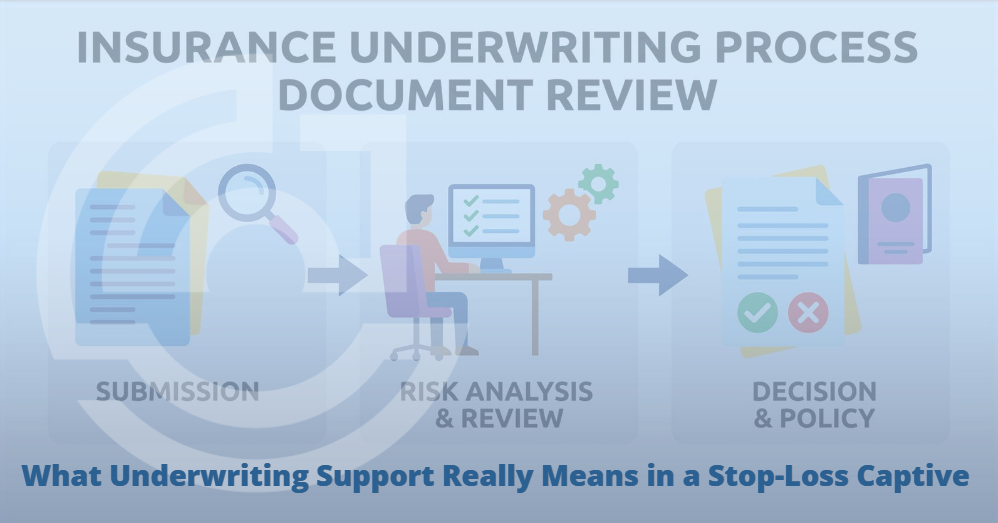
It means you’re not doing this alone. Before you ever submit, you should have a clear roadmap of what’s needed and what to expect.
First, you need real help gathering the data. Three years of claims data are required to move forward, along with census data, plan documents, and financials. A strong manager hands you a checklist, helps you spot gaps and fixes them before they become problems.
Here’s a tip worth knowing. Three years gets the case moving, but if you can pull five years of claims data, that opens the door to a substantial report showing your client exactly how their group would have performed inside a captive structure. That report is one of the most powerful things you can put in front of a client who’s on the fence.
The quality of the submission starts with the quality of the data, and you shouldn’t have to guess at what’s required.
Second, actuarial input you can actually understand. The actuarial analysis sets the attachment points and retention levels your client will carry, which determines where the stop-loss coverage kicks in and how much risk the group holds before it does. In other words, it decides how much the group pays for the predictable claims versus how much protection they’re buying for the big ones.
You should have someone who walks you through those numbers, not just a PDF you’re left to decode on your own.
Third, a presubmission review. Before the case goes to the carrier, someone should sit down with you and go through it. Are there red flags in the loss history? Is the claims experience stable enough? That’s the conversation that keeps you from getting blindsided later.
What Happens to My Role After the Client Signs?
Here’s the part nobody warns you about: underwriting support isn’t only about getting the client in. It’s about keeping you in.
With a lot of captive managers, your role quietly shrinks the day your client signs. You made the introduction. You sat in every meeting. Then the manager starts talking straight to your client, and suddenly you’re on the sideline hoping somebody throws you the ball.
Real support keeps you as the quarterback. Your name stays on the submission. You’re in the case design. You’re the one explaining the underwriting decision to your client, because you’re the one who actually understands it.
Strong underwriting support keeps you central to the relationship rather than sidelined by it.
What Should I Ask Before I Recommend a Program?
Three questions. The answers tell you fast whether a manager is built to support you or replace you.
What documents do you need, and when? A vague “we’ll figure it out as we go” is a red flag. You want a checklist with timelines so you can set real expectations with your client.
Who reviews the case before it’s submitted? If no underwriter or actuary looks at it with you first, you’re flying blind, and so is your client.
How do you communicate the underwriting decision, through me or straight to my client? If they go around you, that isn’t support. That tells you exactly how they’ll treat the relationship once the client is in.
How a manager answers these three questions tells you whether they’ll protect your relationship or step right into it.
Why This Matters for Keeping Your Best Clients
Your clients want lower costs, sure. But what they really want is an advisor who clearly knows what they’re doing. When you show up with the right documents, a realistic timeline, and answers to their questions, you build trust, and that’s how you keep the account.
When the process drags because the data was incomplete, or the client gets declined for something that could have been caught early, your credibility takes the hit. The agents who hold onto their best clients for the long haul are the ones who stay involved at every stage.
The agents who keep their best clients are the ones who stay in the room throughout the process, not just during the introduction.
The Bottom Line
Underwriting support isn’t a nice-to-have. It determines whether you can confidently place a client in a program and remain central to that relationship after they join. Look for real data help, actuarial input you can actually understand, and a presubmission review. Ask the hard questions about how the manager talks to your client. And make sure the structure keeps you as the agent of record, not just the person who opened the door.
This is exactly why I built Captive Coalition the way I did. Every part of how we work, the structure, the rules, the agreements, is built around one line: it’s always your client, never ours. Your name stays on every submission, and we don’t talk to your client without you in the room.
If you want to see how that works and whether it fits your book, apply at captivecoalition.com/membership-apply.
FAQ
What documents do I need for stop-loss captive underwriting?
Most managers want at least three years of claims data, census data, current plan documents, and financials. Some also ask for the claim details by the claimant. If you can pull five years instead of three, you can show the client a much stronger picture of how they’d perform in a captive, so it’s worth asking for. The earlier you know the full list, the easier it is to set expectations so nothing stalls later.
How long does underwriting usually take?
Most submissions run 60 to 90 days from first submission to final placement. The timeline depends on how ready the documentation is. When it drags, it’s almost always because something was incomplete at the start, which is why a presubmission review saves you so much grief.
Can my client start before all the documents are ready?
Often, yes. Many programs let you begin the submission while you gather the rest. The key is knowing what’s truly required for the initial review versus what can come later, so you keep moving rather than waiting on a single missing file.
What if my client gets declined?
A decline isn’t the end of the conversation. Good underwriting comes with feedback on why the client didn’t qualify and what would need to change. You can use that to coach your client on risk improvements that might make them a fit down the road.
How do I make sure I stay involved through the whole process?
Get it in writing up front. Ask whether your name stays on the submission, who communicates decisions, and whether the manager will ever contact your client without you. If the answers are clear and in your favor, you’re protected. If they’re vague, take that as your answer.

Topics: