
You have a client who runs a healthy company, takes care of their people, and still gets handed a double-digit renewal every year with no real explanation. They are frustrated. You are frustrated for them. And in the back of your mind, you know that if you do not bring them a smarter option soon, someone else will.
That is the conversation group for which medical stop-loss captives were built. When an employer joins one, they tend to stay, and they tend to stay with the agent who walked them in. This article breaks down exactly why these programs make clients sticky, where the retention actually comes from, and which of your clients are the right fit before you ever pick up the phone.
Why Do Clients Stay Put Once They Are In a Captive?
Clients stay because a captive solves a problem that traditional insurance could never solve: it gives them visibility and control over their healthcare spending. Once an employer can see where their dollars go and has a hand in the outcome, the annual urge to shop disappears.
In a fully insured plan, your client pays a premium and hopes for the best. In a captive, they are making real decisions about their risk with you guiding the way. That shift changes how they see you. You stop being the person who delivers the renewal and become the advisor who brought them a better way to run the whole thing.
What Does Transparency Actually Change for Your Client?
Transparency keeps your client engaged, and engaged clients do not leave. Instead of a black box, members receive regular statements that show claims activity, reserve levels, and the group's performance.
Here is what that looks like in practice. Of every premium dollar in a typical structure, roughly 65 cents funds claims, about 25 cents covers stop-loss and the captive layer and around 10 cents goes to administration. Your client can see all of it.
In other words, they finally know what they are paying for, and they get to watch it work.
Transparency builds retention because your client can:
- Track claims performance throughout the year
- Understand why their costs moved the way they did
- Watch reserve levels and group results
- Sit at the table for real planning decisions
Industry sources like Berkley Accident and Health point to the same thing: captive members value the data transparency, the say in plan design, and the stability of being part of a group. That visibility is what keeps an employer leaning in instead of looking around.
What About the Underwriting Side?
The underwriting support that comes with a captive is one of the better reasons clients stick around. Your client is not just buying coverage. They are stepping into a program backed by actuarial analysis, claims management, and real risk assessment.
This is also where you set expectations early. You want at least three years of claims data to move a group forward. Five years is preferable because it allows you to build a substantial report showing how that group would have performed within a captive structure.
Simply put, the more history you can put on the table, the clearer the picture you can paint for your client.
When you can walk a client through their projections and show them how the structure protects them from a catastrophic claim, you are delivering a level of strategic value many competing advisors struggle to match. Research from IRMI makes a similar case: group medical stop-loss captives take the volatility problem and contain it within a structure built to handle it. That is the kind of insight that keeps you in the room every time benefits come up.
Will Joining a Captive Cut Into My Compensation?
This is the fear that stops many agents, and it is a fair one. The honest answer entirely depends on whom you partner with.
With so many captive managers, your role quietly shrinks the moment the client signs. The meetings start happening without you. Before long, you are watching from the sidelines while someone else runs the relationship you built.
With the right partner, none of that happens. You stay the quarterback before the client gets in, during the process, and after they are a member. Your compensation and your seat at the table do not erode over time. That is the difference between a manager who tolerates agents and one who is actually built around them, and it is worth vetting hard before you place a single client.
Why Don't These Clients Shop Every Year?
Captive members do not shop every renewal because they are invested in the outcome. Most commit for three to five years to realize the full financial benefit, so walking away early means giving up their own upside.
They have posted collateral. They are tracking their results against the group. They have skin in the game. That changes your renewal conversation completely. Instead of “let me see what else is out there,” it becomes “let us look at how we did and where we can do better next year.” That is a fundamentally different relationship, and a far more durable one.
How Does This Help You Stand Out From Every Other Agent?
A captive gives you something to say that the agent down the street cannot. Most of your competitors are walking into the same prospects, offering the same fully insured plans with the same shrug at renewal time.
When you can offer a transparent, controllable option that lets an employer share in their own success, you are no longer competing on price. You are competing on a better idea, and that is a competition you can win. It is also how you protect your existing book, because the agent who never mentions captives is the one most exposed when a competitor finally does.
Are These Programs Only For Big Agencies?
No. You do not need a giant agency or a benefits department to bring a client into a captive. Group medical stop-loss captives work just as well as small-agency solutions because the program provides underwriting muscle, analysis, and back-end support.
Your job is to know your client and open the door. You bring the relationship and the trust. The program brings the horsepower. A solo producer with the right partner can compete with a national shop on this, which is exactly why so many independent agents use captives to punch above their weight.
Which Of Your Clients Are Actually a Good Fit?
The best fit is an employer that is already self-funded or open to it, spends real money on healthcare, and is tired of double-digit renewals despite running a healthy organization.
Look across your book for clients who check these boxes:
- Roughly 50 to 5,000 enrolled employees, with the sweet spot between 50 and 500
- Self-funded today, or curious about moving off fully insured
- A stable, healthy workforce frustrated by costs that keep climbing
- An owner who wants control and is willing to think in multi-year terms
- It is a multi-year commitment, usually three to five years, not a one-year experiment
- Collateral is required, so there is money on the line
- Claims volatility still exists, and a bad year is still possible
- A captive on its own is not a cost containment tool
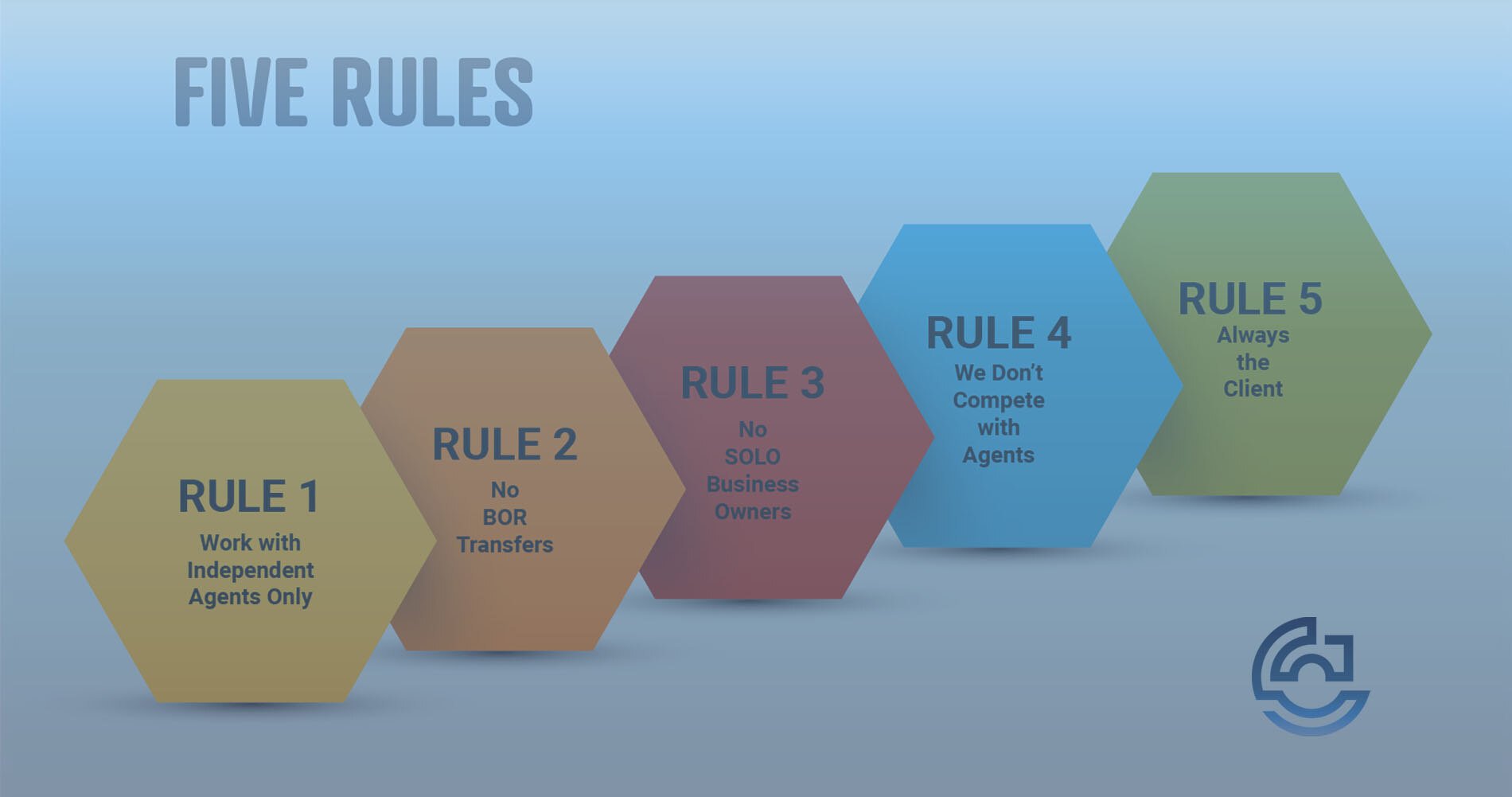
- We work only with independent agents
- No surprise broker of record changes
- An agent must represent every employer
- We do not compete with you for clients
- It is always your client, never ours
You do not have to be an expert to spot these clients. You have to recognize the pattern and be the one willing to start the conversation.
What Should You Tell a Client About the Downsides?
A captive is not right for every employer, and saying so out loud is what makes a client trust you. There are real trade-offs your client should understand before they ever commit.
Be straight with them about these:
That last point matters. A captive provides an employer with transparency and a structure for participating in their own results, but it does not reduce claims on its own. Cost containment comes from the strategies layered on top, and the employer has to be willing to engage with them.
Bottom line, the captive is the vehicle. The savings come from how you and your client choose to drive it.
An employer who hears all of this and still wants in is exactly the kind of client who stays for years. The ones who balk at the commitment were never going to be sticky anyway, and you just saved yourself a painful renewal down the road.
Where This Leaves You
Your best clients are tired of paying into a system that hands them a bigger bill every year and offers no explanation. Left alone, that frustration is an open door for the next agent who walks in with a better idea.
Group medical stop-loss captives close that door. They give employers transparency, control, and a real stake in their own results, and they keep you at the center of the relationship through a multi-year structure that does not reset every twelve months. You do not need to be a captive expert to use this. You need to recognize the right client and be willing to open the conversation.
The next step is simple: look across your book and find the clients who fit the profile above. Then decide whether you want the tools and backing to walk them in with confidence.
That last part is where we come in. I started Captive Coalition after watching too many good agents get sidelined the moment their client signed. We built it exclusively for independent agents, and we run on five rules that exist to protect your role:
If you want the education, tools, and support to bring captives to your clients without ever risking the relationships you have built, you can apply for your free Agent Account, and we’ll reach out with the next steps.

FAQs About Stop-Loss Captives and Client Retention
Why do stop-loss captives improve client retention?
They improve retention by giving employers transparency, cost control, and a share in their own success. A client who can see where their healthcare dollars go and has a multi-year stake in the outcome has little reason to shop at renewal.
How is a stop-loss captive different from regular stop-loss insurance?
Regular stop-loss transfers all the risk to a carrier, with no chance of getting anything back. In a captive, employers pool risk with similar businesses and can recoup unused premium dollars when the group performs well.
Are stop-loss captives right for every employer?
No. An employer generally needs enough enrolled lives, a willingness to commit for several years, collateral, and reasonably stable claims to benefit. A client who is not ready for a multi-year commitment is usually not a fit, and that is fine to say plainly.
Do I have to be a captive expert to bring this to my clients?
No. You need to recognize which clients fit and be willing to start the conversation. The program supplies the underwriting, analysis, and support, so a small agency or a solo producer can offer this just as credibly as a large shop.
How long do clients usually stay in a captive program?
Most members commit for three to five years to capture the full financial benefit. That multi-year structure is what creates natural retention and gives you deeper, more strategic renewal conversations year over year.
It's always your client. Never ours.
Topics: